Home
Mission statement
To advance IT knowledge through continuous learning and professional development. We foster collaboration and innovation by connecting professionals, academics, and students. We also engage with industry and community leaders to address societal challenges and drive technological progress.
Vision statement
To promote excellence in computer science and IT by empowering professionals and students through continuous learning, fostering collaboration and innovation, supporting industry growth, and engaging with the broader community to address societal challenges through technology.
Core values
The core values of a CSI Chapter typically include:
- Excellence: Committing to the highest standards in professional and academic pursuits, fostering a culture of continuous improvement and innovation.
- Collaboration: Promoting teamwork and knowledge sharing among members, industry professionals, and educational institutions to drive collective success.
- Integrity: Upholding ethical standards and transparency in all interactions, ensuring trust and respect within the community.
- Inclusivity: Encouraging diversity and welcoming contributions from all members, regardless of background, to enrich the IT field.
- Service: Engaging with the community to address societal needs and contribute positively through technology and expertise.
About Us
The CSI Student Chapter is a branch of the Computer Society of India (CSI) specifically designed for students interested in computer science and information technology. It provides a platform for students to engage with the latest developments in the field, gain practical experience, and connect with industry professionals.
Key Aspects of a CSI Student Chapter are
- Educational Opportunities: The chapter organizes workshops, seminars, and guest lectures to help students stay updated with industry trends and enhance their technical skills.
- Networking and Collaboration: It creates opportunities for students to network with peers, faculty, and industry experts, facilitating collaborations on projects and research.
- Skill Development: The chapter often conducts hackathons, coding competitions, and other events that help students apply their knowledge practically and develop problem-solving skills.
- Professional Growth: It offers resources and support for career development, including guidance on internships, job placements, and professional certifications.
- Community Engagement: The chapter engages in community outreach and social initiatives, applying technology to address local and global challenges.
Overall, the CSI Student Chapter aims to bridge the gap between academic learning and industry practice, preparing students for successful careers in IT.
Committee Members
CSI Student Branch – Committee Members (2024-25)
| Name of the Member | Role and Department |
| Dr.M. Subba Rao | Dean – Non-Statutory & Professional Bodies |
| Dr. V. Sathyendra Kumar | Member – CSE |
| Dr.K.Uday Kumar Reddy | Member – AI&DS |
| Dr. N.Penchalaiah | Member – AIML |
| Mr. B.Dilip Chakravarthy | Member Secretary |
Events
The following are some of the activities conducted by the IEEE Student Branch:
- Scheduling speakers on technical and professional subjects, including guest lectures and workshops
- Entering design competitions
- Engaging in engineering awareness programs
- Participating in CSI conferences
- Collaborating with other CSI Student Branches
- Organizing field trips to industry sites
- Providing tutorials for non-members and conducting membership drives
- Raising funds for charitable causes and Student Branch projects
Publishing a Student Branch newsletter.
Gallery
Annual Activity Plan
The following is an illustrative activity calendar for one academic year.
| S. No. | Proposed Activity | Suggested Period | Expected Outcome |
|---|---|---|---|
| 1 | CSI Chapter Inauguration and Student Orientation | June–July | Awareness of CSI and membership opportunities |
| 2 | Programming Workshop | July | Improved coding skills |
| 3 | Technical Quiz Competition | August | Better subject knowledge |
| 4 | Expert Lecture on Artificial Intelligence | August–September | Awareness of emerging technologies |
| 5 | Coding and Debugging Contest | September | Improved problem-solving skills |
| 6 | Hands-on Workshop on Data Science | October | Practical technical knowledge |
| 7 | Technical Paper Presentation | November | Research and presentation skills |
| 8 | Hackathon or Innovation Challenge | December | Teamwork and innovation |
| 9 | Resume and Interview Preparation Workshop | January | Career readiness |
| 10 | Project Exhibition | February | Demonstration of practical skills |
| 11 | Industry Interaction or Industrial Visit | February–March | Industry exposure |
| 12 | Annual CSI Day and Student Achievement Recognition | March–April | Motivation and recognition |
Note: The schedule may be modified according to the college academic calendar, examination timetable, available resources, and CSI chapter guidelines.
Major Activities Conducted by the CSI Student Chapter
The CSI Student Chapter can organize various activities in the academic year 2025-2026 to support students’ technical and professional development.
3.1 Technical Workshops
Workshops provide hands-on experience in current technologies and practical applications.
- Artificial Intelligence and Machine Learning
- Data Science and Data Analytics
- Python Programming and Java Programming
- Web Development
- Cloud Computing
- Cybersecurity and Ethical Hacking
- Internet of Things (IoT)
- Generative AI and Prompt Engineering
Outcomes: Students gain practical knowledge, improve technical competency, and become familiar with tools and technologies used in industry.
3.2 Expert Lectures and Guest Talks
The chapter can invite industry professionals, researchers, entrepreneurs, and experienced academicians to deliver lectures on emerging technologies and career opportunities.
Suggested topics:
- Current trends in the IT industry
- Career opportunities in Artificial Intelligence
- Software development practices
- Research opportunities in computer science
- Industry expectations and placement preparation
- Entrepreneurship and technology startups
Outcomes: Students gain industry insights, receive career guidance, and understand the skills required for professional success.
3.3 Coding Competitions and Programming Contests
Programming contests can be organized to encourage students to develop coding skills and solve computational problems.
- Coding challenges
- Debugging competitions
- Algorithm design contests
- Competitive programming
- Programming quizzes
- Code optimization challenges
Outcomes: These activities improve logical thinking, programming proficiency, time management, and problem-solving abilities.
3.4 Project Development and Demonstrations
Students can be encouraged to develop mini-projects and innovative applications under the guidance of faculty members and industry mentors.
Example projects:
- Student attendance management system
- Smart timetable generator
- AI-powered chatbot
- Student performance prediction system
- Online examination platform
- College information chatbot
- Smart waste management system
Outcomes: Students learn to apply theoretical concepts, develop practical solutions, document their work, and demonstrate their technical abilities.
Expected Outcomes
The effective implementation of a CSI Student Chapter is expected to produce the following outcomes:
- Improved technical knowledge and practical skills among students.
- Increased participation in coding competitions and technical events.
- Better project development and problem-solving capabilities.
- Enhanced communication, teamwork, and leadership skills.
- Greater awareness of emerging technologies and industry requirements.
- Increased participation in research, innovation, and technical paper presentations.
- Improved preparation for internships, placements, and professional certifications.
- Greater awareness of professional ethics and lifelong learning.
Report on Coding Competition – “CODEZEN 2K25”
Organized by: Department of Computer Science and Engineering
In Association with: CSI Student Chapter
Date of Event: 24-02-2025
Venue: Computer Laboratories, Annamacharya University, Rajampet
Target Participants: First-Year B.Tech Students
The Department of Computer Science and Engineering, Annamacharya University, Rajampet, in association with the CSI Student Chapter, organized a coding competition titled “CodeZen 2K25” on 24th February 2025 for First-Year B.Tech students.
The main objective of the competition was to encourage students to develop their programming skills, logical thinking, problem-solving abilities, and interest in coding. The event provided an opportunity for students to demonstrate their technical knowledge and improve their programming capabilities through practical coding activities.
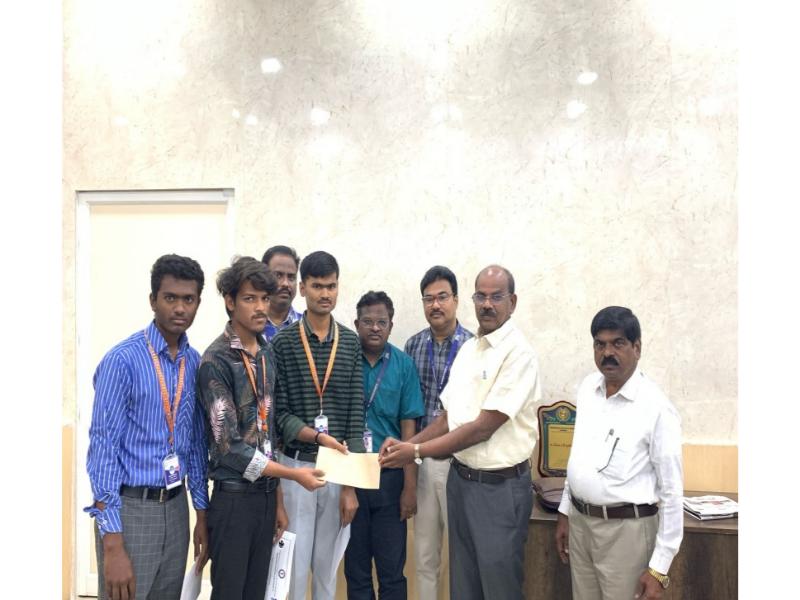
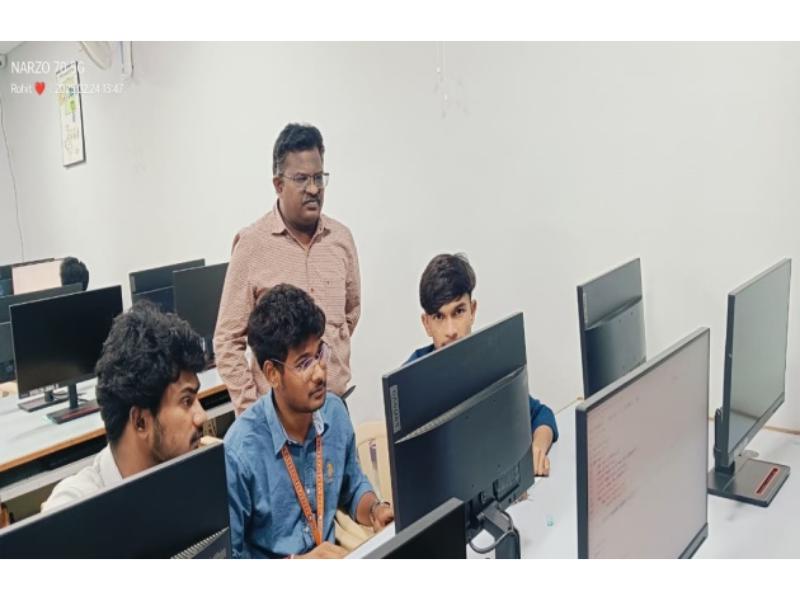
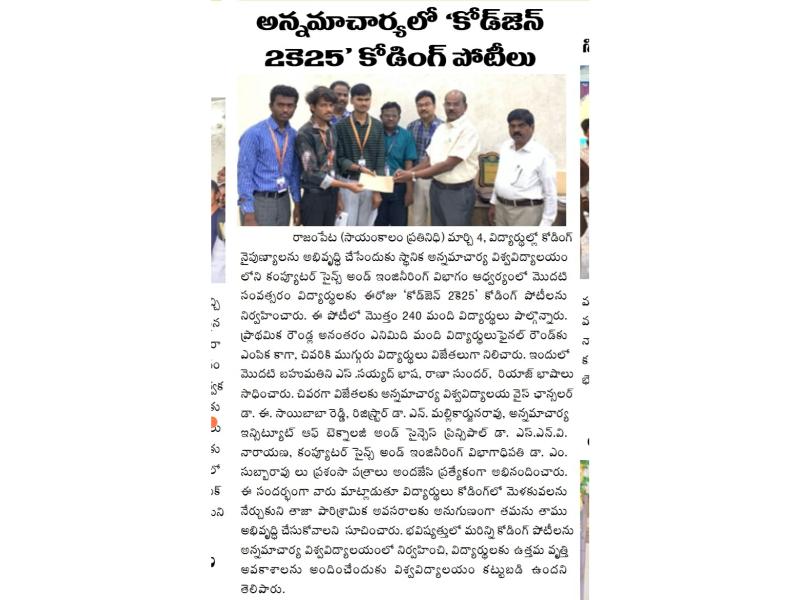
A total of 240 students actively participated in the competition. The contest was conducted in the university computer laboratories under the guidance and supervision of the faculty members and CSI Student Chapter coordinators. Following the preliminary round, eight students were shortlisted for the subsequent round, and finally, three students emerged as winners.
The winners were appreciated for their performance and received recognition from the university authorities and faculty members. The event was coordinated by Mr. B. Dilip Chakravarthy, CSI Student Chapter Coordinator, along with the faculty members of the Department of CSE.
The programme was conducted successfully with enthusiastic participation from students. The competition helped promote a coding culture among first-year students and motivated them to enhance their technical skills and prepare for future programming challenges.
Outcome
The competition encouraged students to improve their programming knowledge, logical reasoning, teamwork, and problem-solving skills while providing them with practical exposure to competitive coding.
Photographic Highlights
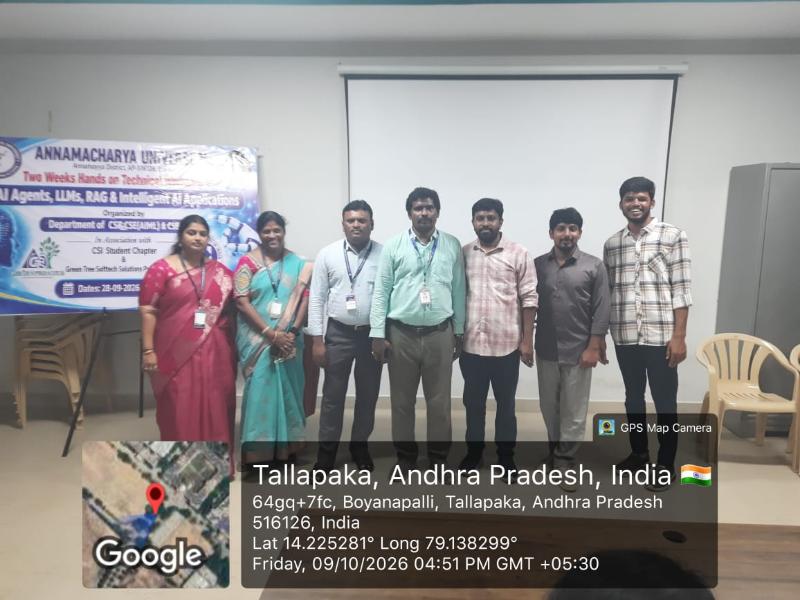
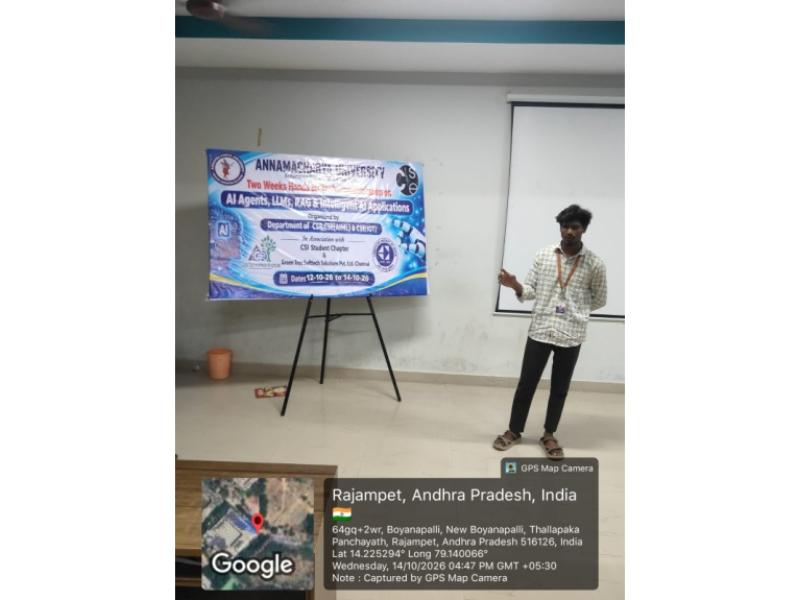
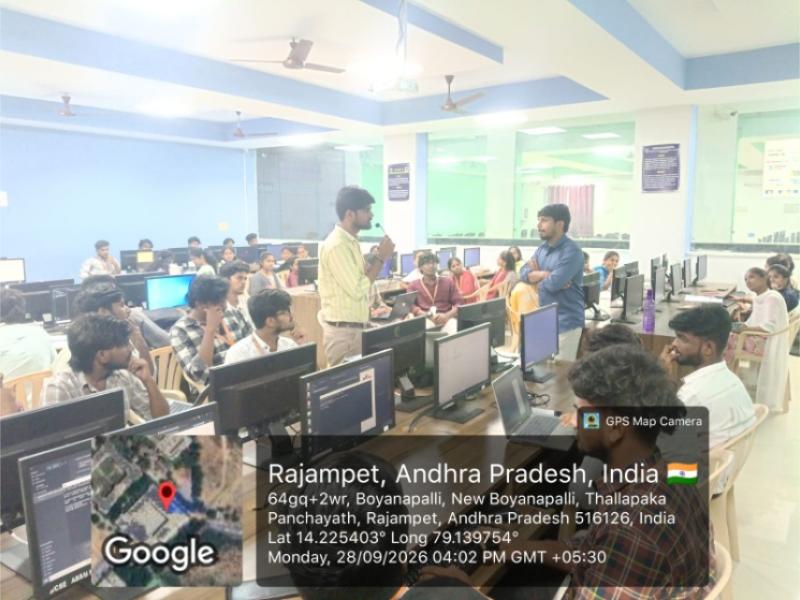
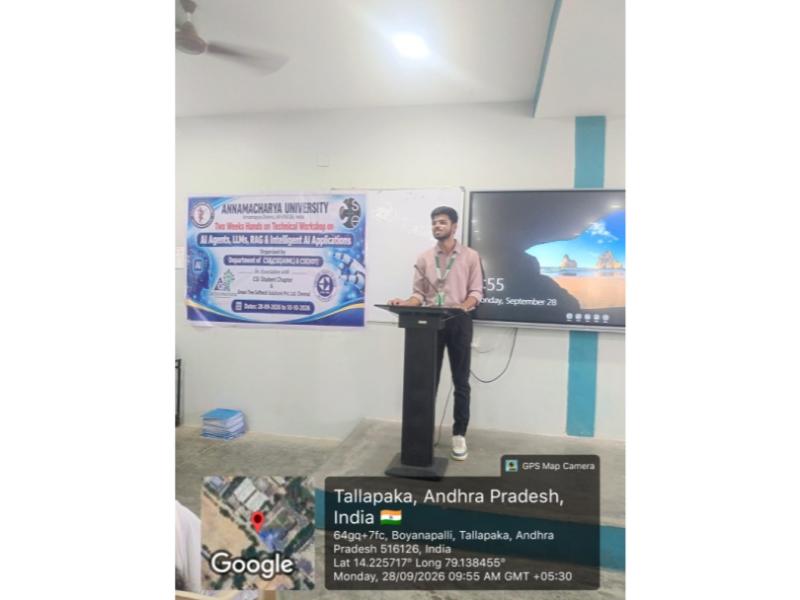
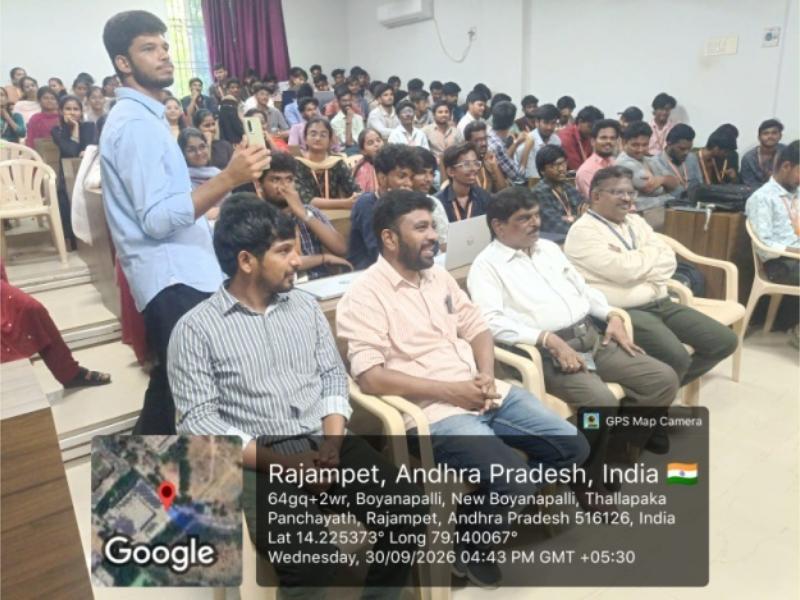
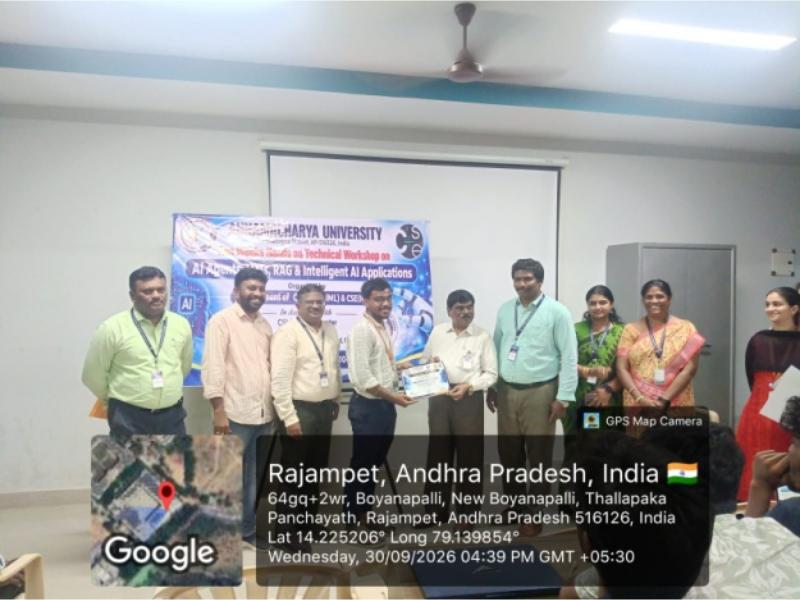
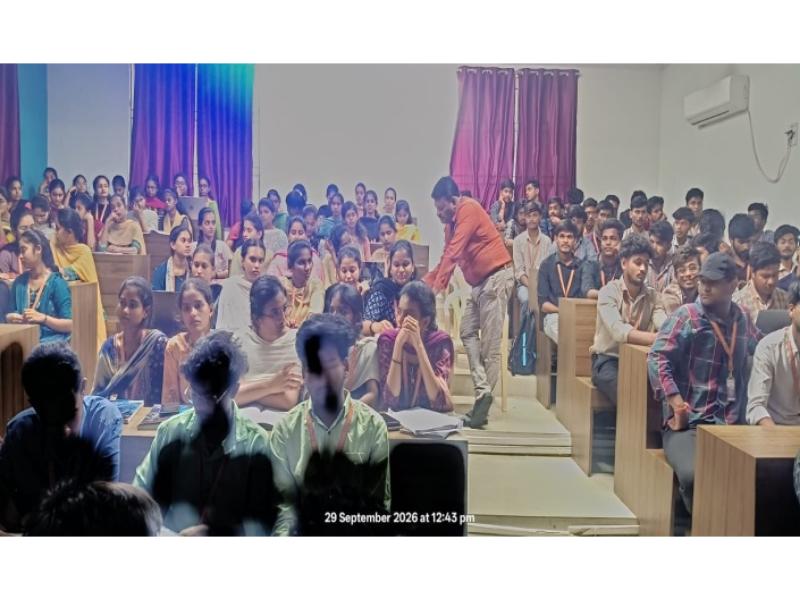
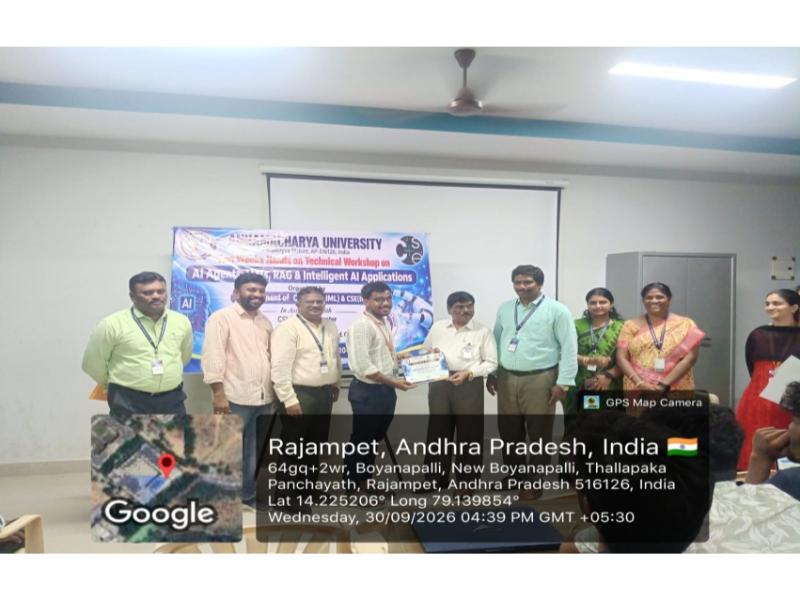
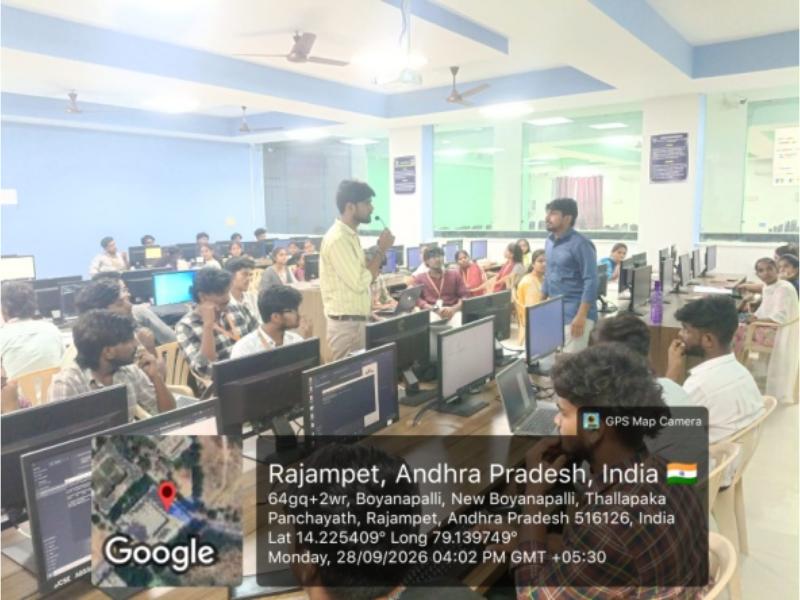
Workshop on AI Agents, LLMs, RAG & Intelligent AI Applications
Dates: 28th September, 2026 to 30th September, 2026
Venue: Annamacharya University, Tallapaka, Boyanapalli, Andhra Pradesh
1. Introduction
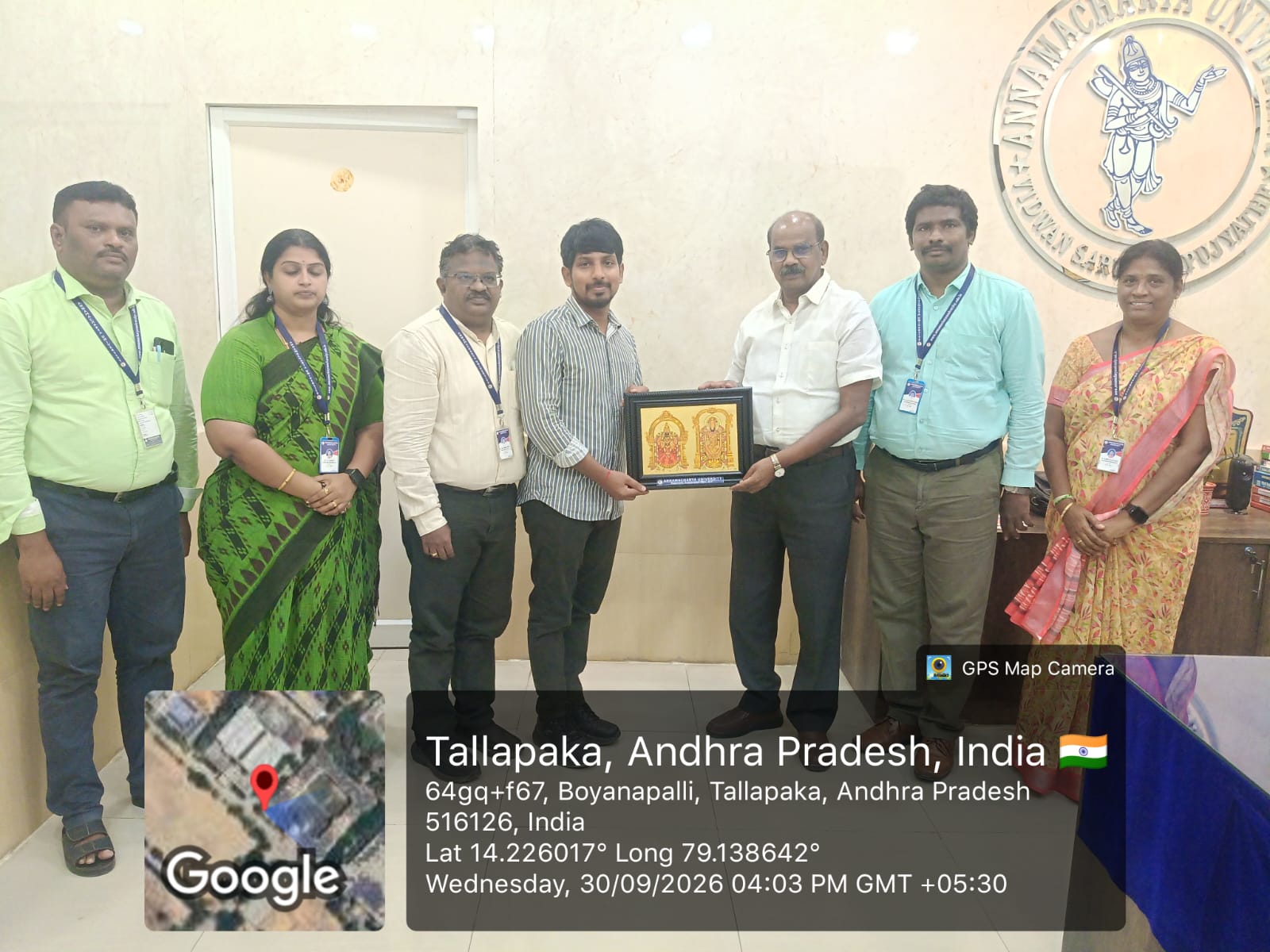
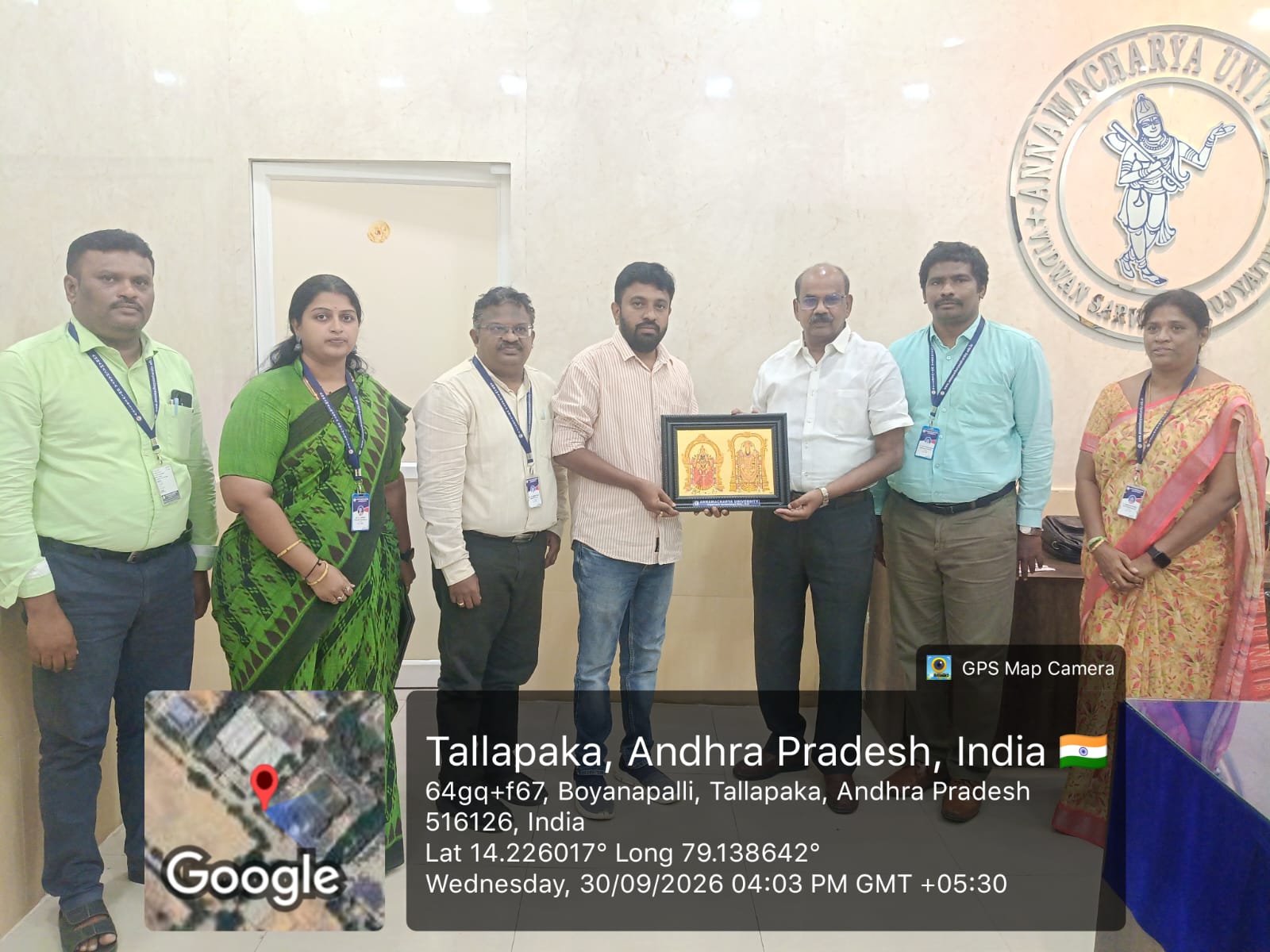
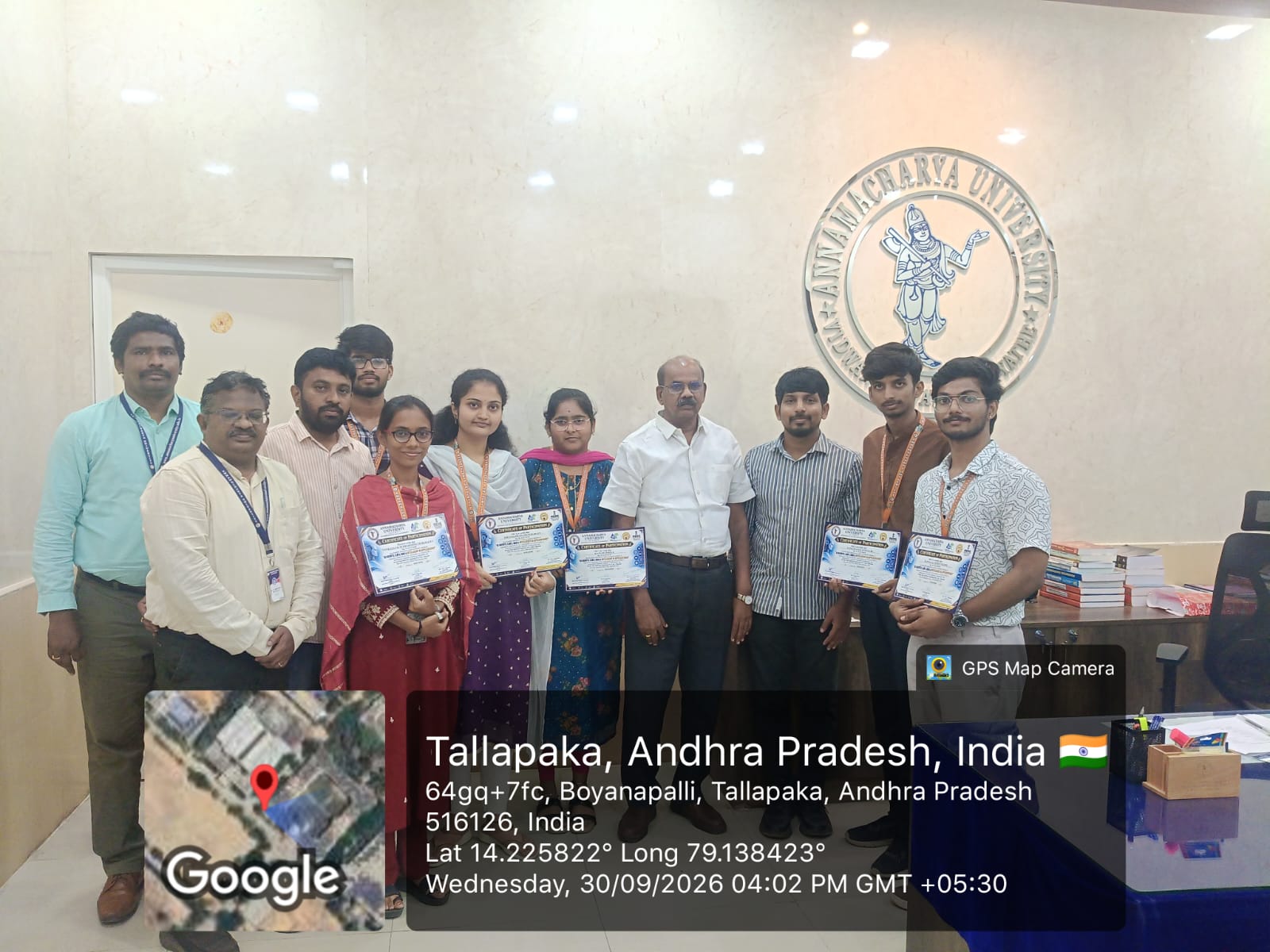
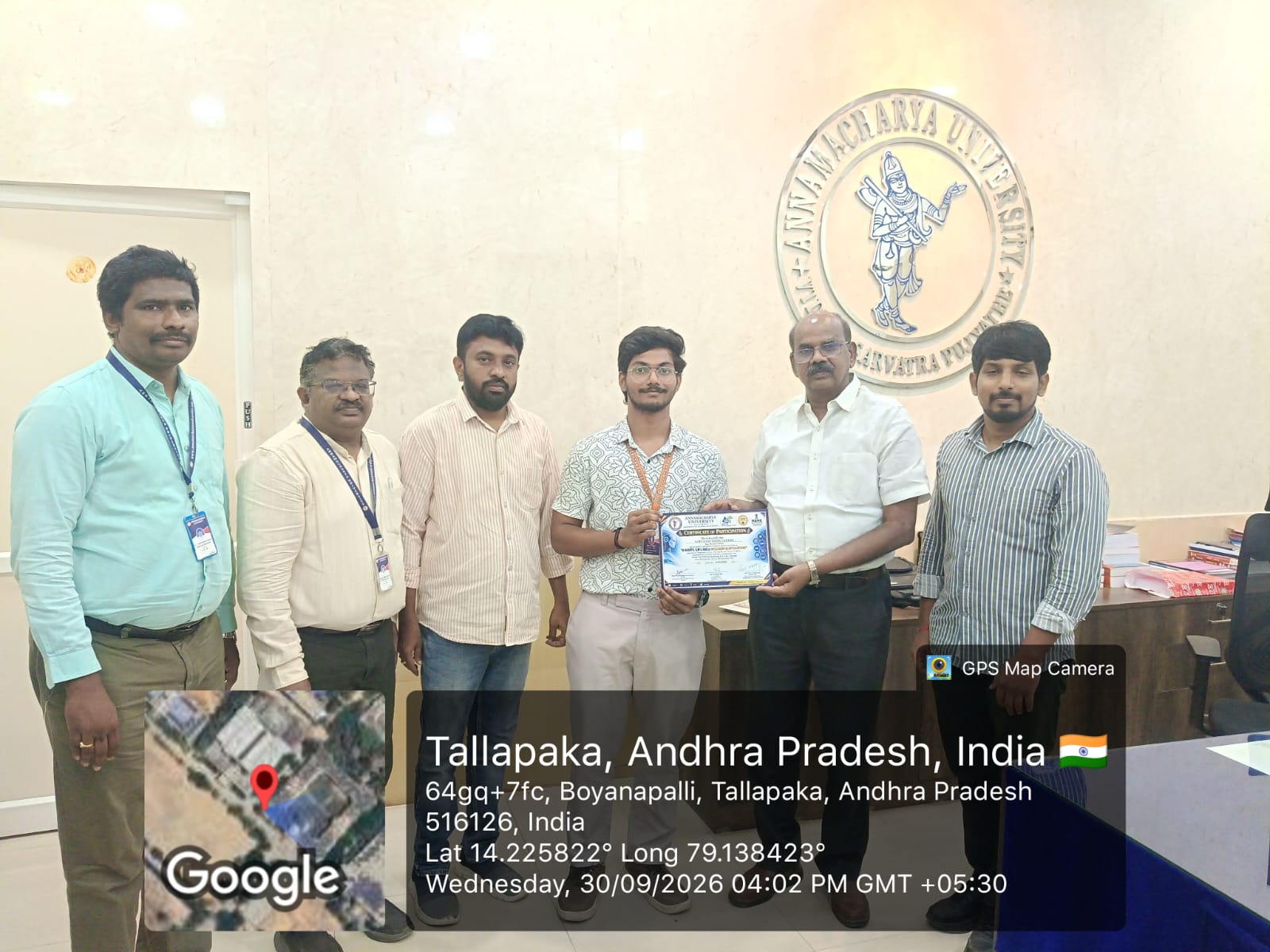
A workshop on “AI Agents, Large Language Models (LLMs), Retrieval-Augmented Generation (RAG) and Intelligent AI Applications” was conducted at Annamacharya University, Tallapaka, Andhra Pradesh, on 30 September 2026. The programme brought together faculty members and students to learn about recent developments in artificial intelligence and their practical relevance.
2. Objectives of the Workshop
The major objectives of the workshop were:
- To introduce participants to the fundamentals and applications of Artificial Intelligence and Large Language Models.
- To explain the architecture, capabilities, and working principles of AI Agents.
- To understand Retrieval-Augmented Generation (RAG) and its role in developing knowledge-based AI systems.
- To explore intelligent AI applications in education, healthcare, business, research, and other domains.
- To encourage students to develop practical skills in emerging AI technologies.
- To create awareness about the opportunities and challenges associated with generative AI.
3. Technical Sessions and Key Topics
The workshop focused on four important areas of modern Artificial Intelligence.
a) Artificial Intelligence Agents
Participants were introduced to AI Agents and their ability to perform tasks autonomously based on user instructions and defined objectives. The concepts of reasoning, planning, tool utilization, task execution, and interaction with external systems were discussed. The importance of AI Agents in automating complex workflows and developing intelligent assistants was highlighted.
b) Large Language Models (LLMs)
The session on Large Language Models covered their fundamental concepts, architecture, and applications. Participants gained an understanding of how LLMs process natural language, generate meaningful responses, summarize information, and assist in problem-solving. Their applications in conversational AI, content generation, coding assistance, and educational support were also highlighted.
c) Retrieval-Augmented Generation (RAG)
The workshop introduced Retrieval-Augmented Generation, an approach that combines information retrieval with generative AI. Participants were familiarized with how RAG systems retrieve relevant information from external knowledge sources and use it to generate contextually relevant responses. The importance of RAG in improving response accuracy, reducing unsupported answers, and developing domain-specific AI applications was emphasized.
d) Intelligent AI Applications
The workshop explored the growing importance of intelligent AI applications in real-world scenarios. The discussion covered AI-powered chatbots, virtual assistants, automated information retrieval, intelligent question-answering systems, and productivity-enhancement solutions. Participants were encouraged to explore innovative project ideas using modern AI technologies.
4. Learning Outcomes
The workshop provided valuable exposure to emerging developments in Artificial Intelligence. The key learning outcomes included:
- Improved understanding of AI Agents and autonomous task execution.
- Familiarity with the capabilities and applications of Large Language Models.
- Understanding of RAG architecture and knowledge-based AI systems.
- Awareness of practical applications of generative AI in different sectors.
- Motivation to undertake innovative projects and research in Artificial Intelligence.
- Enhanced awareness of the importance of continuous learning in emerging technologies.
6. Conclusion
The workshop on AI Agents, LLMs, RAG and Intelligent AI Applications served as a valuable academic activity for promoting awareness of contemporary AI technologies. The interaction among faculty and students, together with the presentation of certificates, added to the programme’s academic value. Such initiatives can help learners develop practical skills and prepare for further study and responsible application of artificial intelligence.
Photographic Highlights
CSI Membership Benefits
Student Membership Benefits:
The benefits of being part of a CSI (Computer Society of India) Student Chapter include:
- Educational Enrichment: Access to exclusive workshops, seminars, and guest lectures by industry professionals and academics, enhancing classroom learning with real-world insights.
- Networking Opportunities: Platforms to connect with peers, experienced professionals, and potential employers through networking events, conferences, and industry meet-ups.
- Skill Development: Opportunities to participate in coding competitions, hackathons, and project-based activities that build practical skills and foster innovation.
- Career Support: Resources for career development, including guidance on internships, job placements, resume building, and interview preparation.
- Leadership Experience: Opportunities to take on leadership roles within the chapter, organizing events and managing teams, which develop organizational and management skills.
- Collaborative Projects: Access to collaborative projects and research initiatives, promoting teamwork and hands-on experience in solving real-world problems.
- Professional Growth: Eligibility for various awards, certifications, and recognitions that can enhance academic and professional credentials.
- Community Engagement: Involvement in outreach programs and initiatives that apply technology to address societal challenges and contribute to community development.
Contact Us:
Dr. M. Subba Rao, Professor and Head,
Department of CSE,
Annamacharya University, Rajampet.
Ph.No: 9848885492,
msraoswap@gmail.com