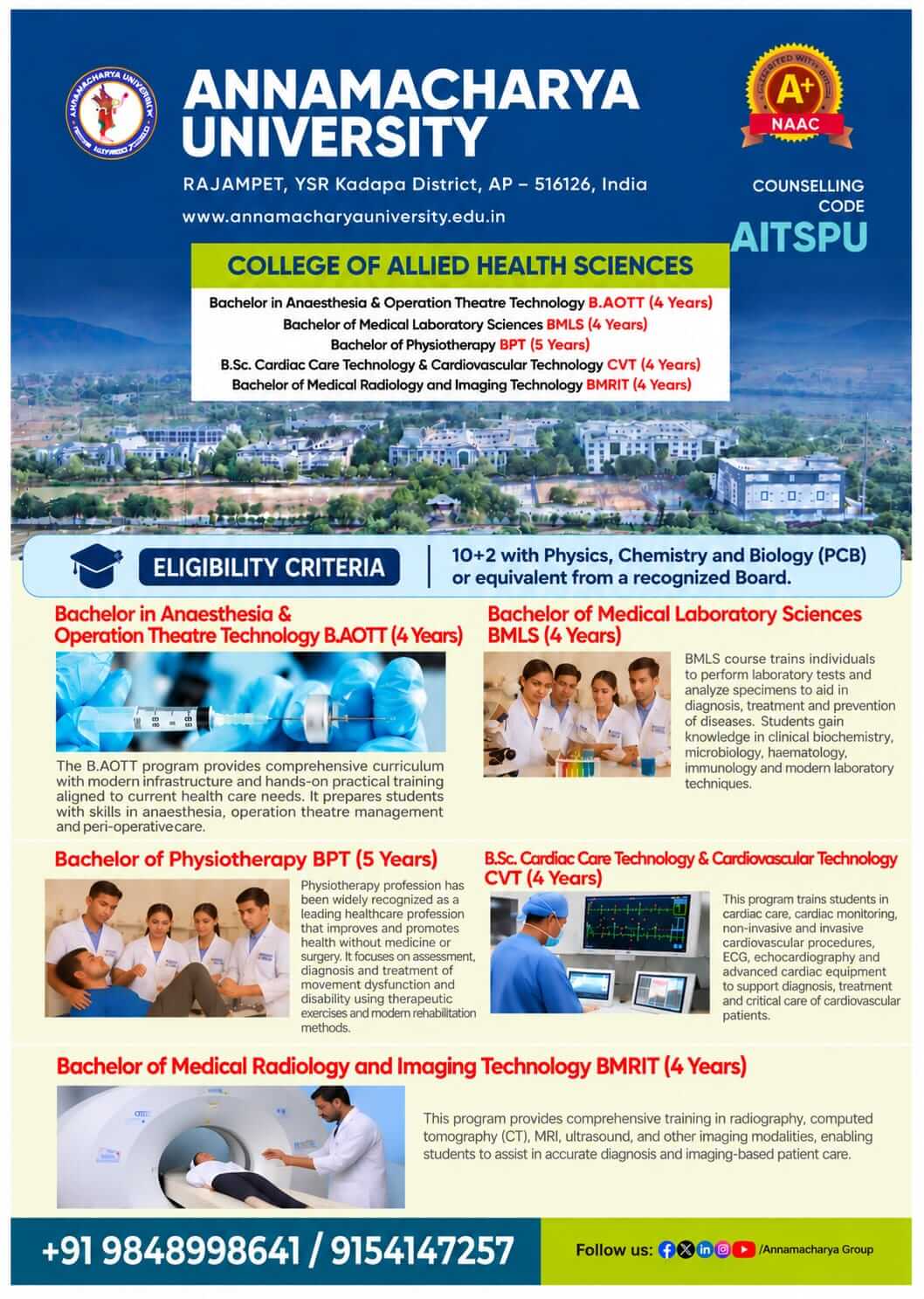
B.Sc. in MLT- Medical Lab Technology
Research Areas
The Department of Medical Laboratory Sciences at Annamacharya University, Rajampet, encourages research activities that contribute to advancements in diagnostic laboratory services, disease detection, clinical investigations, healthcare quality and patient safety. The department promotes interdisciplinary research, evidence-based laboratory practices and the application of emerging technologies to improve diagnostic accuracy and patient outcomes.
The major research areas of the department include:
1. Clinical Biochemistry
- Evaluation of biochemical markers in the diagnosis and monitoring of diseases.
- Diabetes mellitus and metabolic disorders.
- Liver and renal function biomarkers.
- Cardiac biomarkers and cardiovascular diseases.
- Thyroid function tests and endocrine disorders.
- Oxidative stress and antioxidant markers.
2. Haematology and Clinical Pathology
- Haematological changes in infectious and systemic diseases.
- Anaemia prevalence, classification and laboratory diagnosis.
- Platelet abnormalities and coagulation disorders.
- Leukaemia and other haematological malignancies.
- Peripheral blood smear analysis and diagnostic accuracy.
- Laboratory evaluation of blood disorders.
3. Medical Microbiology
- Antimicrobial resistance and antibiotic susceptibility patterns.
- Hospital-acquired infections and infection surveillance.
- Bacterial, viral and fungal infections.
- Microbiological diagnosis of infectious diseases.
- Emerging and re-emerging infectious diseases.
- Microbial contamination and infection prevention practices.
4. Histopathology and Cytopathology
- Histopathological evaluation of tissue specimens.
- Cytological diagnosis of benign and malignant lesions.
- Early detection and screening of cancer.
- Histopathological patterns in inflammatory and infectious diseases.
- Advances in tissue processing, staining and microscopic examination.
- Digital pathology and image-based diagnostic techniques.
5. Immunology and Serology
- Immunological markers in autoimmune diseases.
- Serological diagnosis of infectious diseases.
- Tumour markers and immunodiagnostic techniques.
- Allergy testing and immune-mediated disorders.
- Evaluation of inflammatory and immune response markers.
- Advances in immunoassays and diagnostic technologies.
6. Blood Banking and Transfusion Medicine
- Blood group distribution and prevalence studies.
- Transfusion-transmitted infections.
- Blood component preparation, storage and quality control.
- Compatibility testing and cross-matching procedures.
- Transfusion reactions and their laboratory investigation.
- Voluntary blood donation awareness and blood bank practices.
7. Molecular Diagnostics and Genetics
- Application of PCR and molecular techniques in disease diagnosis.
- Molecular detection of infectious diseases.
- Genetic markers associated with inherited disorders.
- Molecular oncology and cancer biomarkers.
- Advances in nucleic acid-based diagnostic techniques.
- Application of molecular diagnostics in personalized medicine.
8. Parasitology and Mycology
- Prevalence of intestinal parasitic infections.
- Laboratory diagnosis of fungal infections.
- Epidemiological studies of parasitic diseases.
- Emerging fungal pathogens and antifungal resistance.
- Microscopic identification of parasites.
- Diagnostic approaches to opportunistic infections.
9. Laboratory Management and Quality Assurance
- Quality control and quality assurance in diagnostic laboratories.
- Pre-analytical, analytical and post-analytical errors.
- Laboratory accreditation and quality management systems.
- Evaluation of diagnostic accuracy and reliability.
- Laboratory biosafety and biomedical waste management.
- Automation and laboratory information management systems.
10. Emerging Technologies and Digital Laboratory Sciences
- Artificial intelligence in medical laboratory diagnosis.
- Machine learning applications in disease prediction.
- Digital pathology and automated image analysis.
- Automation in clinical laboratory investigations.
- Point-of-care testing and rapid diagnostic methods.
- Telepathology and digital healthcare technologies.
11. Public Health and Preventive Laboratory Medicine
- Laboratory-based screening for communicable diseases.
- Prevalence of diabetes, anaemia and other non-communicable diseases.
- Community-based health screening programmes.
- Epidemiological surveillance of infectious diseases.
- Laboratory investigations in nutritional deficiencies.
- Early diagnosis and prevention of lifestyle-related diseases.
12. Translational and Interdisciplinary Research
- Correlation of laboratory parameters with clinical outcomes.
- Development and evaluation of novel diagnostic biomarkers.
- Comparative evaluation of diagnostic methods.
- Research on diagnostic efficiency and patient care.
- Collaboration with clinical departments for disease-oriented research.
- Evidence-based improvements in laboratory practices.
Research Focus of the Department
The Department of Medical Laboratory Sciences aims to promote:
- Diagnostic Excellence: Improving the accuracy, reliability and efficiency of laboratory investigations.
- Innovative Research: Encouraging research in molecular diagnostics, automation, artificial intelligence and emerging technologies.
- Public Health Research: Addressing communicable diseases, non-communicable diseases and community health concerns.
- Quality and Patient Safety: Strengthening laboratory quality assurance, biosafety and diagnostic standards.
- Interdisciplinary Collaboration: Promoting collaborative research with clinical and allied healthcare departments.
- Student Research Development: Encouraging undergraduate students to participate in research projects, scientific presentations, publications and evidence-based laboratory practices.