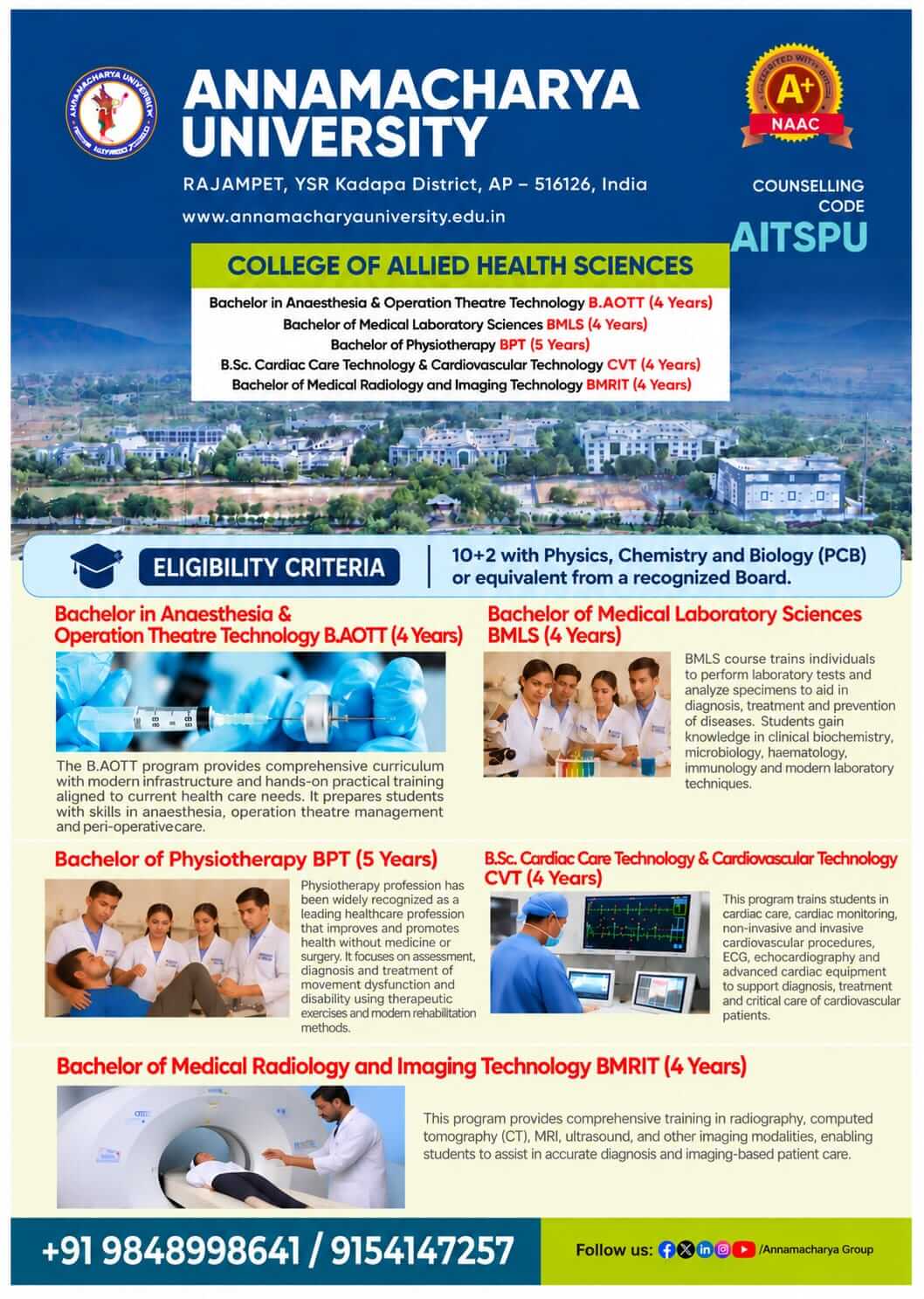
BPT- Bachelor of Physiotherapy-Vision and Mission
Vision and Mission
Vision
To be a leading Department of Physiotherapy recognized for excellence in physiotherapy education, clinical practice, research, and rehabilitation services, dedicated to developing competent, compassionate, and ethically responsible physiotherapy professionals who contribute to improved healthcare and societal well-being.
Mission
- M1: To uphold the values of ‘Vidwan Sarvatra Pujyathey’ by providing quality physiotherapy education that emphasizes ethical conduct, clinical knowledge, professional competence, and compassionate patient care.
- M2: To deliver high-quality physiotherapy education through innovative teaching, evidence-based clinical practice, research, and the development of critical thinking and problem-solving skills.
- M3: To foster a supportive and inclusive learning environment that prepares graduates to provide effective rehabilitation services and contribute positively to society through preventive, promotive, and rehabilitative healthcare.
Program Educational Objectives (PEOs)
PEO 1: Graduates will apply scientific knowledge, clinical reasoning, and evidence-based physiotherapy practices to assess, diagnose physiotherapy-related functional problems, and manage patients with various physical disabilities and movement disorders.
PEO 2: Graduates will demonstrate professional ethics, integrity, empathy, and responsibility while delivering patient-centred physiotherapy care.
PEO 3: Graduates will engage in research, lifelong learning, and professional development to advance physiotherapy practices and rehabilitation technologies.
PEO 4: Graduates will contribute to community healthcare through preventive, promotive, and rehabilitative services, improving functional independence and quality of life.
Program Outcomes (POs)
At the end of the Bachelor of Physiotherapy (BPT) programme, graduates will be able to:
- PO1: Physiotherapy Knowledge: Apply knowledge of anatomy, physiology, biomechanics, pathology, and physiotherapy principles in patient assessment and management.
- PO2: Clinical Assessment and Reasoning: Identify, assess, and analyze physical impairments, functional limitations, and movement-related disorders using appropriate clinical assessment methods.
- PO3: Physiotherapy Intervention: Plan and implement appropriate physiotherapy interventions to improve mobility, strength, functional independence, and quality of life.
- PO4: Evidence-Based Practice: Apply research-based knowledge and evidence-based approaches in clinical decision-making and physiotherapy practice.
- PO5: Modern Tools and Technologies: Use appropriate physiotherapy equipment, rehabilitation technologies, and modern assessment tools safely and effectively.
- PO6: Professional and Social Responsibility: Demonstrate awareness of healthcare responsibilities, patient safety, legal requirements, and societal needs in physiotherapy practice.
- PO7: Environment and Community Health: Promote health, wellness, disability prevention, and community-based rehabilitation while considering environmental and social factors.
- PO8: Professional Ethics: Demonstrate ethical conduct, professional integrity, confidentiality, and respect for patient rights.
Program Specific Outcomes (PSOs)
- PSO1: Clinical Competency: Graduates will demonstrate professional knowledge and practical clinical skills in musculoskeletal, neurological, cardiopulmonary, sports, paediatric, and other specialized areas of physiotherapy.
- PSO2: Rehabilitation and Patient-Centred Care: Graduates will effectively apply evidence-based physiotherapy interventions and rehabilitation techniques to restore functional independence, prevent disability, and improve patients’ quality of life.